Collector guide
DVD Storage Ideas for a Safer, Easier Shelf
Practical DVD storage ideas for choosing a shelf, cabinet, or small-space setup that keeps movies easy to find and ready to play.
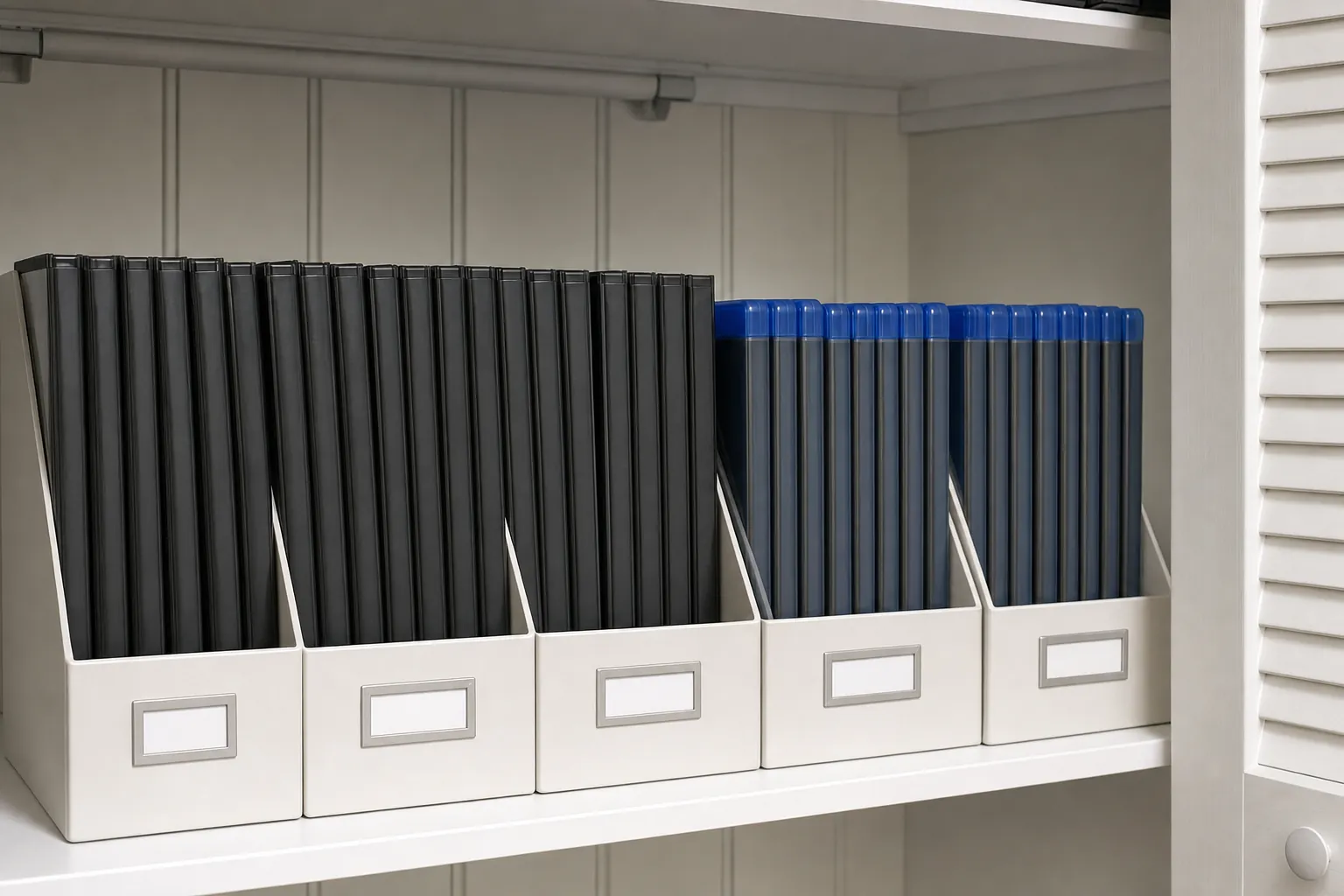
Good DVD storage does more than make a room look tidy. It makes a collection easier to use, protects the copies you have chosen, and keeps movie night from turning into a hunt through loose stacks. The right setup does not need to look like a video store or take over a wall. It needs to fit the size of your collection, the way you choose movies, and the space you can keep stable year after year.
Start with the collection you actually have, not the cabinet you imagine filling someday. A few favorite discs on one shelf need a different answer than several hundred titles, box sets, imports, and out-of-print editions. The useful storage idea is the one that lets you find the exact copy you want without squeezing cases, burying titles, or treating the shelf as a pile that happens to stand upright.
1. Choose a storage style before you buy furniture
The first decision is not wood versus metal or open shelf versus cabinet. It is whether you want the collection visible, concealed, portable, or divided between everyday viewing and long-term keeping. That choice makes the rest much easier.
An open bookcase is the most straightforward option for a collection you browse often. You can scan spines, pull a title quickly, and notice when a case has been returned to the wrong section. It also encourages you to use the movies you own. The downside is dust and direct light, so an open shelf works best in a room with steady indoor conditions rather than beside a sunny window or a heating vent.
A cabinet with doors is useful when you want a quieter-looking room or need a little more protection from dust, pets, and curious hands. Look for shelves that are deep enough for a case without leaving it buried behind another row. Double-stacking saves space, but it turns a collection into a memory test. If you cannot see the spine, you are less likely to watch the movie.
For a small collection, a dedicated shelf in an existing bookcase is often better than buying a large media unit too early. Give the collection a clear boundary, leave a little growing room, and see how you actually use it. A defined home helps you decide whether the next purchase deserves a place instead of creating a pile on the floor.
2. Keep DVDs upright, cased, and easy to remove
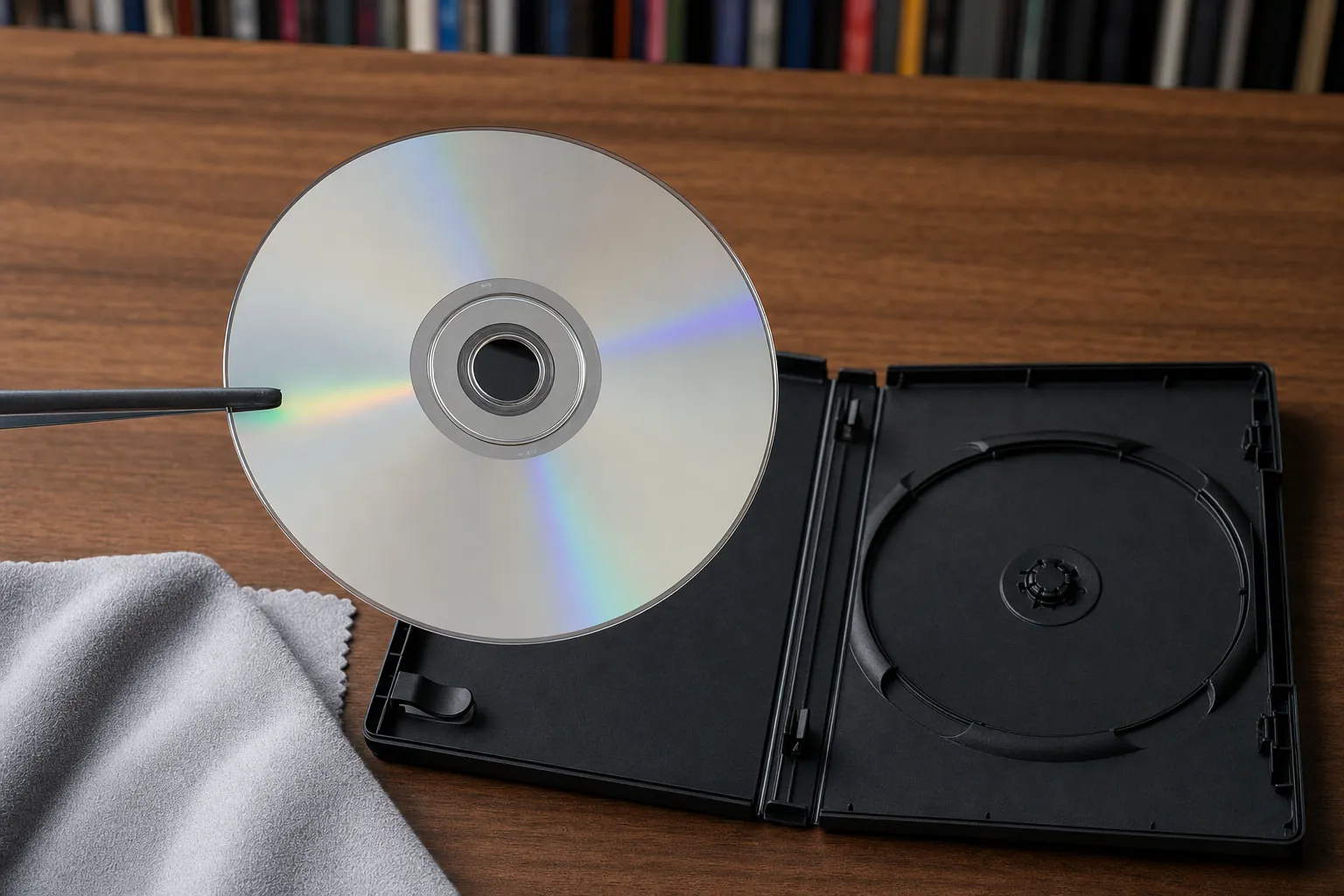
For most home collections, upright cases are the simplest answer. They are easier to browse, easier to return, and less likely to slide against a playing surface than loose discs in a stack. A case also keeps the artwork, inserts, disc count, and edition information with the movie. That matters when one title exists in several cuts, regions, or releases.
Do not pack a shelf so tightly that cases bend or require a hard pull. The goal is a snug row, not a compressed one. Leave enough space to remove a case with two fingers and return it without shoving the entire row sideways. A small bookend or a few sturdy cases at the end of a run can keep shorter rows from leaning without forcing pressure across the shelf.
The care guidance from the National Archives supports the practical habits collectors can follow at home: protect optical media from unnecessary handling, keep it in a protective container, and avoid conditions that invite dirt, heat, or moisture. That does not mean a DVD shelf needs archive equipment. It means the boring setup tends to be the one that works.
Original cases are usually worth keeping, especially for box sets, imports, rare releases, and movies with inserts or distinctive artwork. A slim replacement case can be reasonable for a common title with a broken hub. A generic sleeve is a bigger compromise when it separates the disc from the details you may need later to identify the edition.
3. Put the shelf in a calm part of the room
DVD storage is partly about location. A beautiful cabinet in the wrong spot can be less useful than a plain shelf in a steady room. Avoid direct sun, radiators, heat vents, garages, attics, damp basements, and the top of equipment that stays warm for long stretches. Those spots create the temperature swings, moisture, dust, or heat that make a collection harder to keep in good shape.
The Library of Congress guidance for recorded media makes the same common-sense case for stable, moderate conditions and protective containers. At home, the practical version is simple: use the part of the house where you would be comfortable sitting with a movie, not the place where boxes disappear until you forget what is in them.
Keep the shelf a little away from exterior walls if that wall runs cold or damp, and do not place cases directly on the floor. A raised shelf, cabinet base, or lowest bookcase shelf gives you a margin against a minor spill or routine cleaning. If you need to store titles in a closet, choose a shelf rather than a sealed plastic tote that might trap moisture or turn the collection into an invisible backlog.
Dust is not a reason to hide every movie away. It is a reason to use cases, wipe the shelf before it gets gritty, and return a disc to its home after watching it. The DVD cleaning guide explains how to handle a disc safely when fingerprints or residue appear. Storage should make that job less necessary, not create a weekly maintenance ritual.

4. Organize for the way you choose a movie
There is no universal best way to arrange DVDs. The best system is the one that matches the question you ask on movie night. If you usually know the title, alphabetize. If you choose by mood, group by genre. If your shelf is built around a few directors, actors, studios, or eras, give those interests their own section and let the rest stay simple.
A hybrid system works well for many collectors. You might keep horror, westerns, film noir, and television together, then alphabetize within each group. Box sets can live together if they are a meaningful part of your viewing, or stay with their genre when you want everything related in one place. The only rule worth keeping is consistency. A title should have one obvious home.
Labels can help when a shelf is large or divided into cubbies, but do not turn a small collection into a filing cabinet. A discreet genre label at the front of a section can be enough. If you need a reminder of what is behind a cabinet door, place a short list inside the door rather than adding clutter to every spine.
Once the collection grows past what you can remember, make a simple catalog. Record the title, format, edition or region when relevant, and shelf location. The physical media collection guide has a practical approach to keeping that list useful without making it into another project you avoid.
5. Make small spaces work without sacrificing the collection
Limited space does not require you to abandon cases immediately. Start by editing the shelf. Remove titles you no longer expect to watch, combine true duplicates, and decide whether a single multi-disc edition can replace several separate copies. A smaller collection that is readable and playable is better than a larger one that lives in storage bins.
Use vertical space before you use a second hidden row. A tall, narrow media shelf, a bookcase with adjustable shelves, or a cabinet with shallow shelves can keep more spines visible in the same footprint. Avoid shelves so deep that cases disappear behind one another. If you need a back row, reserve it for seasonal viewing, duplicates, or titles you have cataloged clearly, not for the movies you reach for most.
Disc binders and soft sleeves are space-saving tools, not automatic upgrades. They can make sense for common discs, travel copies, or a collection you have intentionally separated from its packaging. They are less appealing for rare, out-of-print, or edition-specific titles because the case and inserts often carry information you may want when replacing, trading, or comparing a copy. Keep the original cases for the discs that would be difficult to identify or replace.
For apartment living, a closed cabinet can give the collection a home without making the room feel like a warehouse. The key is regular access. If a cabinet holds every title but you still browse it, it is working. If it becomes a sealed box of movies you never open, the storage solution has become the problem.
6. Give box sets and special editions a deliberate place
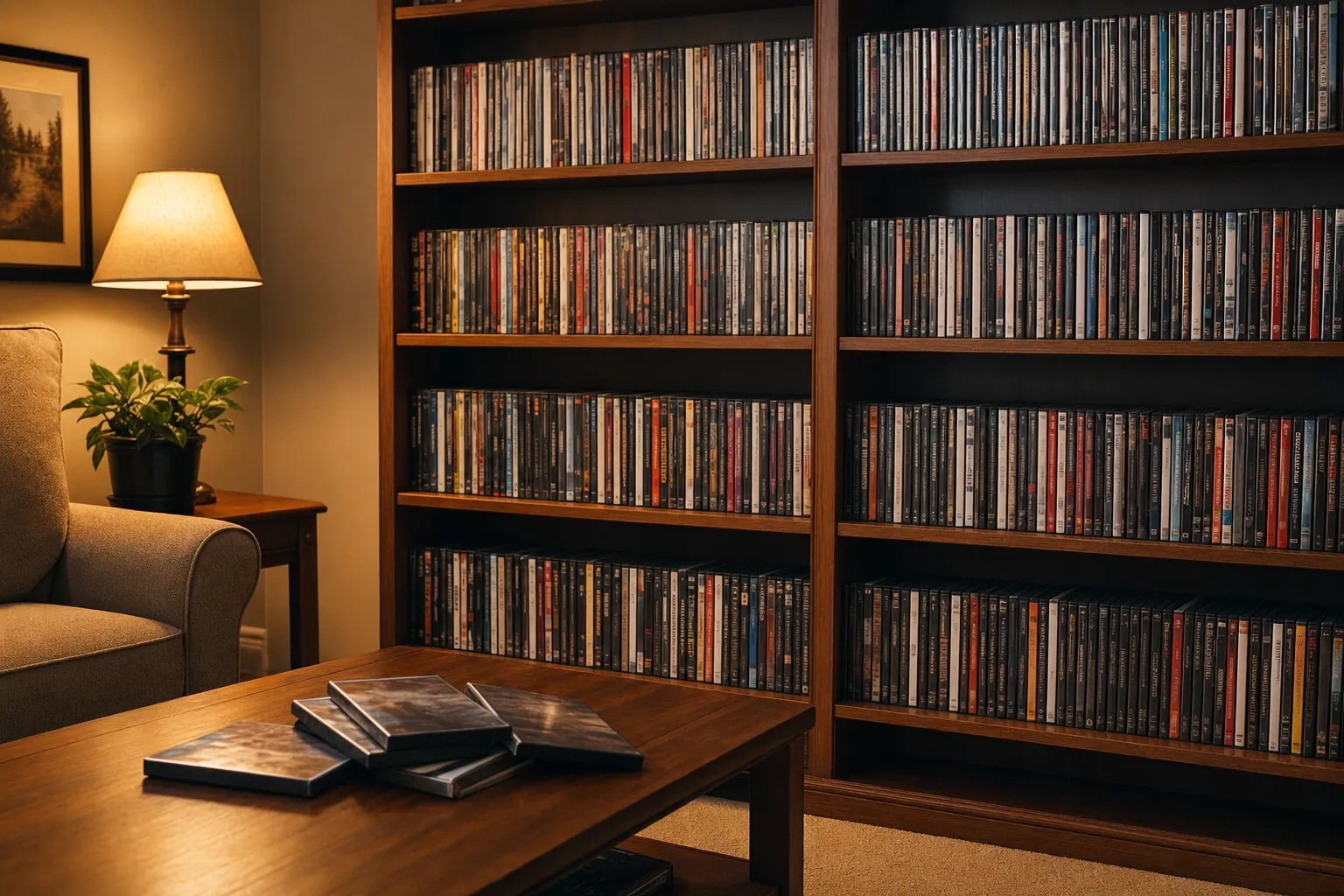
Box sets need a little more thought because they are often taller, wider, or deeper than a standard case. Do not force them into a row where they bend neighboring cases. Give them a shelf height that lets them stand comfortably, or group them at the end of a section where their size does not interrupt browsing.
Keep all discs, booklets, and inserts together. A complete television series or special edition loses some of its usefulness when one disc has drifted into another case or the booklet that explains the set has disappeared. Before buying a used set, check the disc count, packaging, and exact edition. The used-DVD buying checklist can help you assess those details before a box set takes up valuable shelf space.
This is also a reason to avoid organizing only by case size. A shelf can look satisfyingly uniform while becoming difficult to use. Place special editions where you can find them, protect them, and remember why you kept that edition instead of a standard reissue.
7. Keep a little room for the next good find
The most useful storage habit is leaving some open space. A shelf packed to the last millimeter has no room for a birthday gift, a rare replacement, or the movie you suddenly want to revisit in a better edition. A little empty space makes browsing easier and gives you a natural pause before another purchase.
When the shelf fills, use that moment to make a decision. Is there a duplicate you do not need? Is a common title taking the place of a favorite you have been looking for? Is a box set now replacing separate seasons? A collection becomes personal through choices, not sheer volume.
Retro and Classic Flixs is built for those choices, especially when a regular retail search does not surface the exact movie or edition you want. Use title search when you know what belongs on the shelf, browse the current DVD selection when you are open to discovery, or explore rare DVDs, out-of-print editions, and hard-to-find titles when a gap in the collection is worth filling carefully.
A simple DVD storage checklist
Before you call a setup finished, make sure the answer to each of these is yes:
Can you see and remove every title you are likely to watch? Keep first rows readable and avoid hiding everyday favorites behind other cases.
Are discs in cases and cases upright without pressure? A calm, loosely supported row is easier on the collection than a packed shelf or loose stack.
Is the storage spot away from direct sun, persistent heat, and damp conditions? Stable indoor space is more valuable than an impressive cabinet in a bad location.
Does every title have one obvious home? A consistent organization method makes a shelf feel smaller, even when the collection is growing.
Is there room for one more title worth keeping? Leave enough space for the next good find, then let that constraint help you choose well.
Good DVD storage should fade into the background. You should notice the movie you want, not the system you had to invent to reach it. Give the collection a stable home, keep the cases readable, and let the shelf make a better movie night easier.
Frequently asked questions
Starting your shelf
Should DVDs be stored upright or flat?
Store DVDs upright in their cases when possible. Upright cases are easier to browse, put less pressure on one another than a loose stack, and make it less likely that a disc will be handled or scratched while you search for another title.
What is the best place to store DVDs at home?
Choose a stable indoor shelf, cabinet, or media unit away from direct sunlight, heat vents, damp basements, and places with frequent temperature swings. The best spot is one that keeps the cases easy to reach and the collection part of your regular viewing life.
Can I throw away DVD cases to save space?
You can, but it is usually a tradeoff rather than a clear upgrade. Original cases help protect the disc and keep artwork, inserts, disc counts, and edition details together. If space is tight, reduce duplicates or move less-watched titles before separating a disc from the information that makes the copy identifiable.
How do I organize a large DVD collection?
Use one method that matches the way you choose movies: alphabetical order, genre, director, or a simple hybrid. Add shelf labels only when they make browsing easier, and keep a small catalog with the title, edition, format, and location once the collection becomes too large to remember.
Are DVD storage binders safe?
A quality binder can reduce the space a collection needs, but it removes discs from the protection and identification of their original cases. Binders make the most sense for common duplicates or travel copies. Keep rare, out-of-print, boxed, or edition-specific releases in protective cases.
Keep exploring
More collector guides.
Collector guide
Physical Media Collection: How to Build One That Lasts
Build and catalog a physical media collection with a simple plan for choosing titles, recording editions, organizing a shelf, and keeping it useful.
Read guide →
Collector guide
Physical Media vs Streaming: A Collector’s Guide
A clear comparison of convenience, ownership, editions, cost, and care for viewers deciding what belongs on the shelf.
Read guide →
Collector guide
What Is Physical Media? DVDs, Blu-rays, 4K & More
Physical media means DVDs, Blu-rays, 4K discs, VHS, and other formats you own. Learn the types, why editions matter, and what to check.
Read guide →Ready for the hunt?