Collector guide
Physical Media vs Streaming: A Collector’s Guide
A clear comparison of convenience, ownership, editions, cost, and care for viewers deciding what belongs on the shelf.
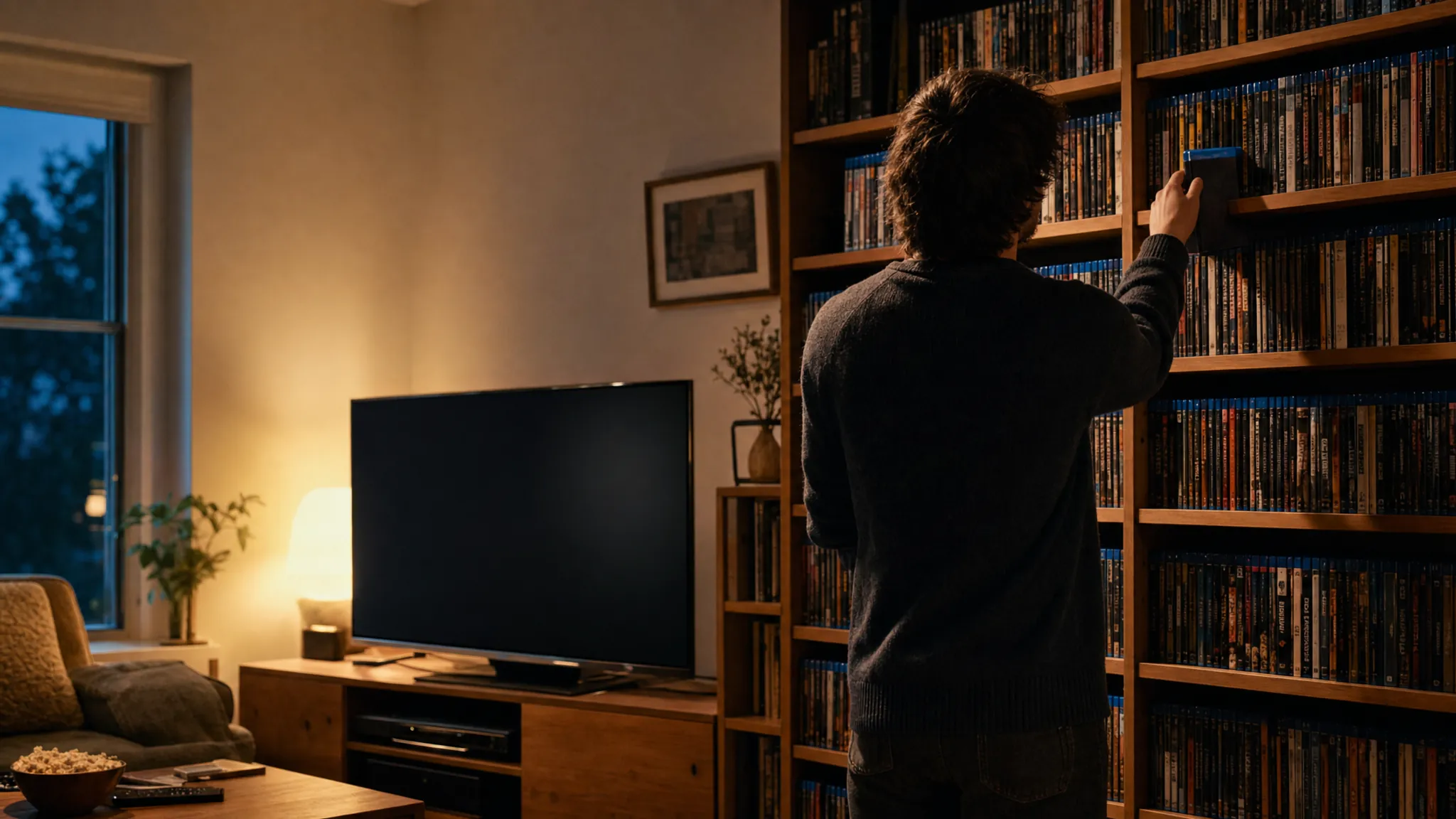
Physical media versus streaming is not a battle between old and new. It is a decision about what you want a movie night to do for you. Streaming is built for speed: open an app, browse a large library, and press play. A disc collection is built for intention: choose a title, choose an edition, and keep the films that matter close at hand.
For most viewers, the right answer is both. Streaming is excellent for discovery, convenience, and a spontaneous watch. Physical media earns its shelf space when a film is part of your life: the title you revisit, the season you want complete, the obscure release that is hard to replace, or the edition with the cut and extras you actually prefer.
Start with what you want from a movie
A subscription and a shelf solve different problems. Streaming gives you range. It is ideal for sampling a director, trying a genre, catching a recent release, or finding something for a casual evening. If you are still learning what you enjoy, broad access is more useful than a stack of blind buys.
Physical media gives you a smaller library with more control. A handful of films you return to every year, a favorite television run, and titles you would be frustrated to lose can be more valuable than hundreds of cases chosen out of habit. The guide to building a physical media collection can help turn that idea into a manageable first list.
Before you buy, ask three questions. Will you watch it again? Does the particular edition matter? Would it bother you if it became difficult to find next month? A yes to any one is a good reason to consider a disc. If the answer is no, streaming is doing exactly what it should.
Where streaming is genuinely better
Streaming wins on convenience. You can move from a recent release to an old favorite to an unfamiliar documentary without making a purchase for each one. It makes a broad movie life possible without a broad storage problem. For travel, shared household accounts, and nights when the point is simply to relax, that convenience is hard to beat.
It is also a useful research tool. Watch a first film from a director you do not know. Compare a few titles from an era. Let a casual viewing become the start of a deeper interest. When the interest sticks, the question changes from “What can I watch tonight?” to “Which version do I want to keep?”
There is no prize for treating every movie as a collector item. A one-time curiosity, a new release, or a title you would not miss later is often better streamed. The limitation is simply that access is arranged by the platform, not by your own priorities. That feels fine until a title becomes a favorite or the version you want is no longer available.
Where physical media earns its place
A disc does not promise that every player will work forever or that every release is perfect. It does give you a copy you can keep, lend, organize, and return to without asking whether it is still in a current catalogue. That matters most with films that are hard to replace.
Collectors often build around a genre, a director, favorite television, childhood films, imports, or hard-to-find titles. This is not nostalgia for its own sake. It is reliability. When you own a compatible disc, your plans for movie night are not shaped by a changing menu or a search result.
Classic cinema, television, and genre titles are especially good candidates. A film can circulate widely for a while, then become unexpectedly difficult to locate. An older release may be available only on DVD, in a region-specific edition, or with extras that a stream does not include. The out-of-print DVD guide explains why some familiar titles leave regular retail long before collectors stop looking for them.
Compare the edition, not the format logo
It is tempting to say that discs always look and sound better. The useful answer is more specific. A well-produced Blu-ray or 4K UHD disc can offer a strong home presentation, especially with a capable player and display. A poorly mastered disc is not improved by being physical, and a good stream can look excellent in an ordinary living room.
The practical difference is consistency and control. A disc plays from the copy in your home. Streaming quality can vary with the service, title, settings, device, and connection. For many casual watches, that difference will not matter. For a favorite film, dark noir, concert release, or carefully restored classic, it may matter a great deal.
Check the details that affect the experience: aspect ratio, subtitles, audio, runtime, playback region, and whether the release is a full season, a feature, or a compilation. A newer format is not automatically the better choice. Older, obscure, and international titles are often most practical on DVD, while a restoration may make a Blu-ray the right upgrade.
The catalogue overview shows the kind of details worth checking before you buy. The best edition is the one you can play, understand, and enjoy.
Why editions matter to collectors
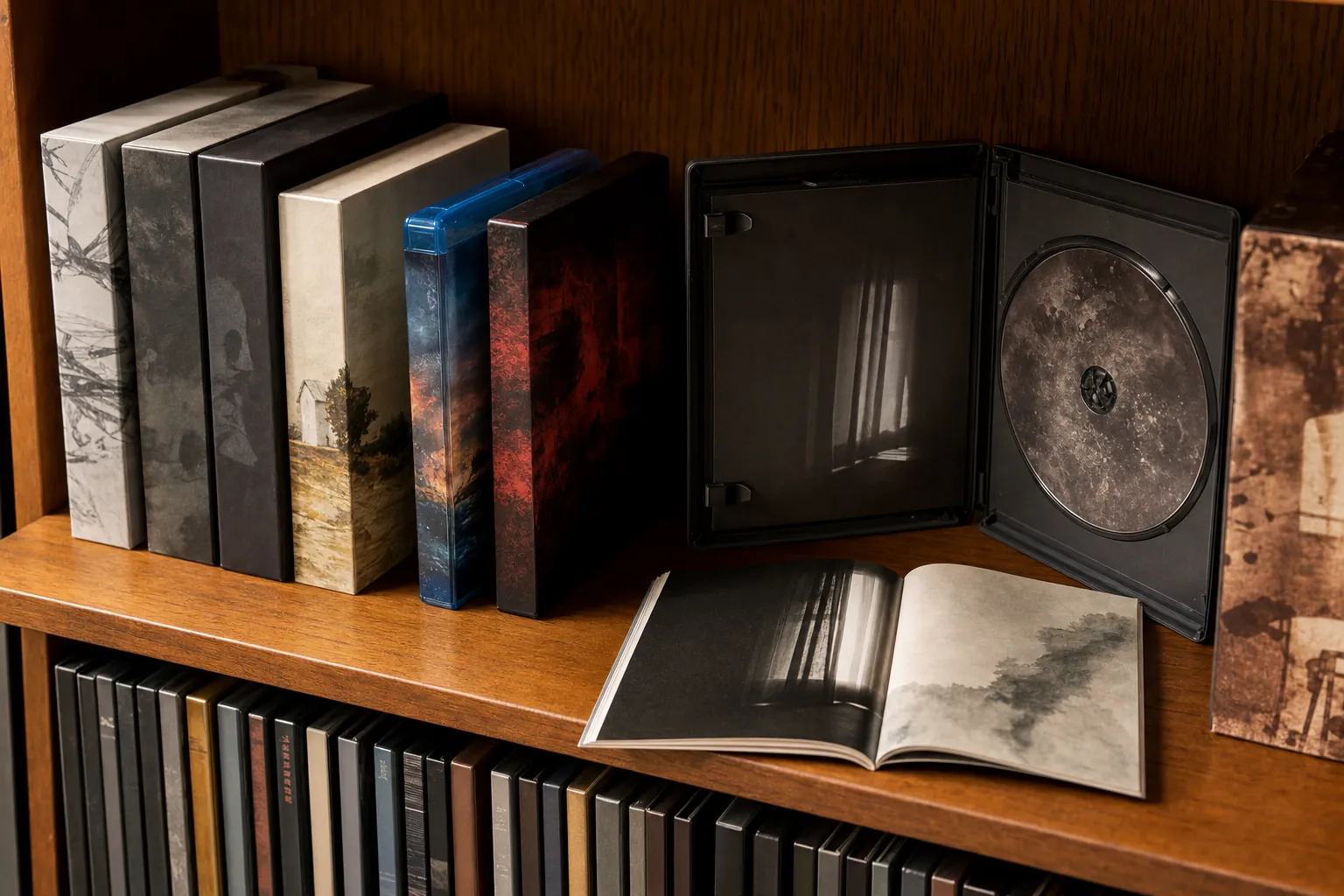
A movie is not always a single fixed object. The same title can exist as a theatrical cut, television version, extended edition, restoration, dubbed release, subtitled release, or a boxed set with a different group of extras. Streaming can make those differences easy to miss because the screen usually presents one option and moves quickly to the next recommendation.
Physical media makes those details easier to keep. Packaging, booklets, commentaries, documentaries, deleted scenes, and alternate audio tracks give context to the movie itself. None of this is required for a good Friday-night watch. But if you care about a director, film history, or the craft behind a release, the edition turns a movie into something you can explore rather than simply finish.
For collectors looking beyond familiar titles, the site’s genre guide can help narrow the hunt. A focused shelf teaches you more about what you value in an edition than a random pile of upgrades ever will.
Cost: buy access, then buy priorities
A streaming subscription is often sensible value when you watch broadly and regularly. A disc collection asks for more thought per title, and rare editions can cost more than a casual viewer wants to spend. The answer is not to cancel every service and replace it with a wall of cases. It is to spend differently.
Let streaming handle discovery, new releases, and one-time watches. Let physical media handle the films you want to keep available. Keep a short wish list with three groups: favorites you will rewatch, titles that are getting hard to find, and editions that offer something you truly value. Set a monthly amount, then wait a few days before buying an unfamiliar title.
Do not mistake a cheap disc for a good addition. A bargain is useful when it leads to a film you will watch, not when it produces clutter. The same is true of expensive collector editions. Buy them when the restoration, extras, packaging, or rarity matter to you, not because a limited-edition label made the decision feel urgent.
The current movie catalogue is best used with a list in hand. Start with a title, a genre, or a gap in your shelf. Browsing becomes more enjoyable when you have room to be surprised without treating every find as an obligation.
Space and care are real tradeoffs
Physical media takes up room. Cases need shelves, box sets need space, and a collection can become difficult to use if it grows without a simple order. That is a real tradeoff, not a flaw to ignore. If your space is limited or you move often, a smaller and more edited collection is usually the better fit.
Discs also need basic care. Keep each disc in its case, avoid direct sun and extreme heat, do not stack loose discs, and handle the edge and center hole instead of the playing surface. The National Archives’ optical-disc guidance recommends vertical storage in protective cases and cleaning from the center outward with a soft lint-free cloth when needed.
Commercially pressed and recordable discs do not have the same long-term profile. The National Archives notes that pressed optical discs can be durable when stored and handled well, while recordable discs can be less dependable over time. Your shelf deserves sensible storage and a little attention, not museum treatment.
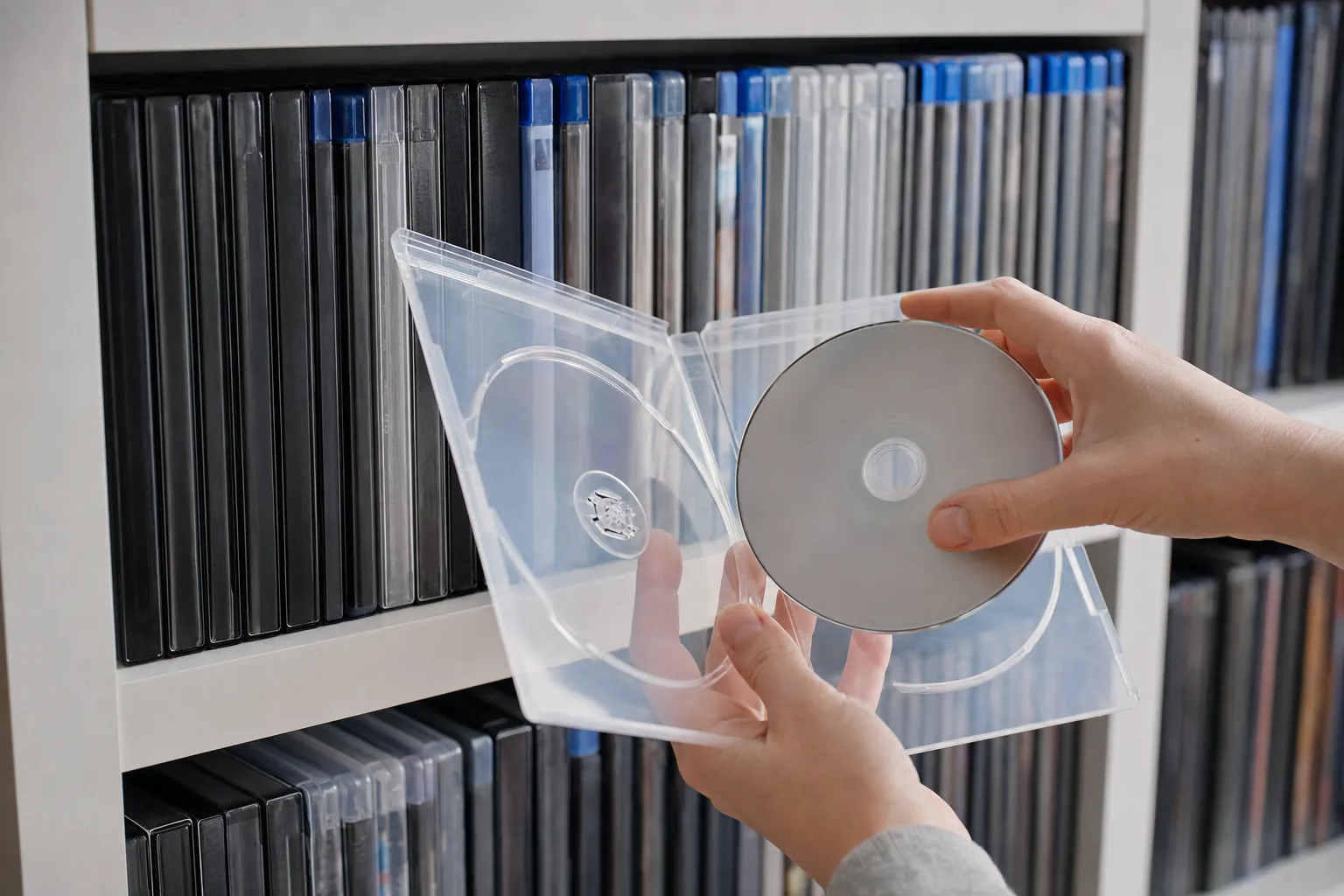
How to choose the right format for one movie
Is it a repeat watch? If you expect to return to it, a disc has more value. If it is a one-time curiosity, streaming is probably enough.
Does the edition matter? Look for cuts, extras, subtitles, region details, and presentation. If you care about those differences, buy the version that answers your needs.
Is it easy to replace? A common title with multiple current options can wait. A rare film, older television title, or out-of-print release may deserve priority.
Can you play it? Check your player and region compatibility before you purchase. A shelf is not improved by a disc that cannot be enjoyed.
Where will it live? Make sure you have a case, a place on the shelf, and a simple way to find it again. That is how a personal library stays personal instead of becoming storage.
A simple way to start without overspending
Give yourself one month of deliberate watching before building a larger shelf. Keep a note of the movies you look for twice, the shows you wish were easier to revisit, and the titles you mention after the credits. At the end of the month, choose one or two that still feel important. That turns collecting into a response to your actual viewing life instead of a reaction to a sale.
Start with the equipment you already own. If you have a DVD player, there is no need to postpone every purchase until you own a newer format. If you have a Blu-ray or 4K setup, reserve upgrades for films where the presentation or extras will change your experience. A sensible collection can include more than one format as long as every disc has a place and a purpose.
It also helps to make one rule for duplicates. Keep a second edition only when it offers a meaningful difference: a complete season, a better restoration, a preferred cut, useful extras, or a playback region you need. This rule keeps upgrades intentional and leaves more room for films you have not yet had the chance to discover.
The best answer is usually both
Streaming and physical media are complementary tools. Streaming is the wide river: easy to enter, always moving, full of options. A disc collection is the shelf you build beside it: smaller, steadier, and shaped by your taste.
Use streaming to discover. Use discs to keep. Let a film earn its place after it has surprised you, comforted you, taught you something, or sent you looking for the version regular retailers no longer carry. Retro and Classic Flixs is built for that latter part of the journey: rare releases, out-of-print favorites, television, genre discoveries, and editions that make a shelf feel like yours.
Frequently asked questions
Making the right choice
Is physical media better than streaming?
Neither option is better for every viewing need. Streaming is the easiest way to browse widely and watch on short notice. Physical media is stronger when you care about a particular title, a specific edition, reliable access, or the experience of keeping a personal library.
Should I buy a movie if it is already streaming?
Buy it when you know you will revisit it, when the edition offers something you value, or when you do not want your access tied to a rotating catalogue. For casual one-time viewing, streaming may be the more sensible choice.
Do DVDs and Blu-rays last forever?
No format lasts forever, but commercially pressed discs can remain usable for a long time when they are handled carefully and stored in stable conditions. Keep each disc in its case, avoid heat and direct sunlight, and replace damaged packaging before it causes problems.
Is a physical collection expensive to start?
It can be, but it does not need to be. Start with a small list of titles you genuinely want to rewatch, set a monthly limit, and choose the edition that fits your player and priorities. A useful shelf grows more slowly than a pile of impulse buys.
Keep exploring
More collector guides.
Ready for the hunt?