Collector guide
What Is Physical Media? DVDs, Blu-rays, 4K & More
Physical media means DVDs, Blu-rays, 4K discs, VHS, and other formats you own. Learn the types, why editions matter, and what to check.
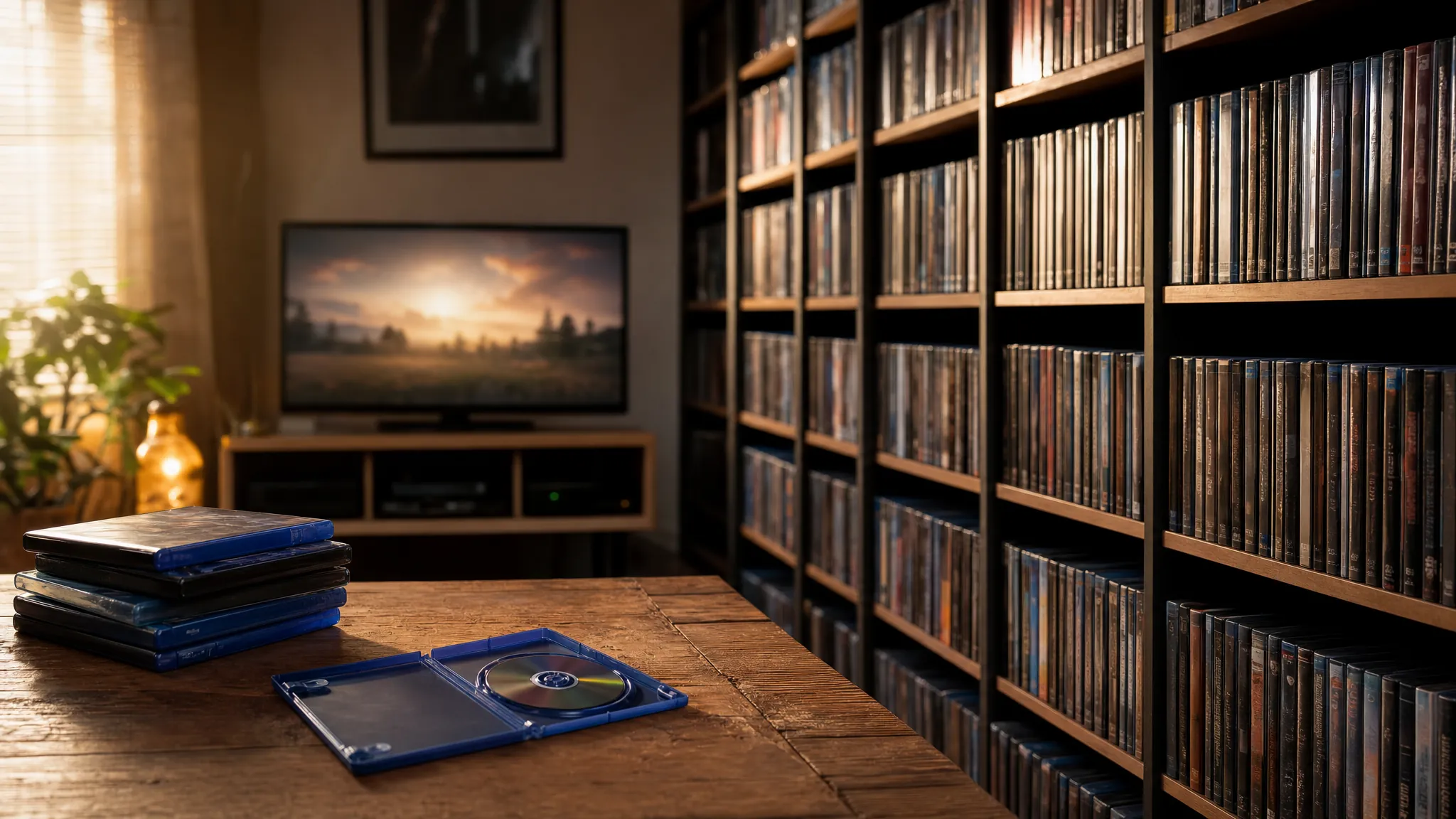
Physical media is a movie or show you own in a tangible format, such as a DVD, Blu-ray, 4K UHD disc, VHS tape, or LaserDisc. You can hold it, keep it, and play it from your own copy instead of relying only on an internet connection or streaming catalogue.
If you have ever watched a favorite disappear from a streaming service, wondered why one copy of a film costs more than another, or found yourself browsing shelves instead of an app, you already understand the appeal. For movie lovers, physical media makes it easier to choose the version you want and keep it within reach.
That does not make a disc collection a replacement for streaming. Streaming is excellent for discovery, convenience, and one-time watches. Physical media is for the movies and shows you want a more deliberate relationship with: the favorite you revisit, the television season you want complete, the genre title that is hard to replace, or the edition whose details matter to you.
What physical media means in plain English
Physical media is content stored on a tangible format rather than delivered only through an internet connection. In the movie world, that can mean film reels, VHS tapes, DVDs, Blu-rays, 4K UHD discs, and even older formats such as LaserDisc. For a home collector today, the conversation is usually about discs, the case they come in, and the particular edition pressed onto that disc.
That definition is practical rather than romantic. A disc is an object you can put on a shelf, lend to a friend, compare against another edition, and play when you have compatible equipment. The National Archives’ physical-media reference includes DVD among the formats used to deliver digitized moving images. In a living room, the same basic idea applies: the movie is carried by a thing you keep, not only by a listing in an app.
Physical does not automatically mean old, rare, or expensive. A new studio release on 4K UHD is physical media. So is an inexpensive used DVD of a television series. The value depends on the title, the edition, the condition, and whether it is one you will actually watch. A shelf becomes meaningful when it reflects your viewing life, not when it proves you bought the most cases.
It also helps to separate physical media from the vague idea of “owning everything.” No collection can cover every possible film, and no format is indestructible. The useful goal is smaller: keep reliable access to the titles that matter to you, in editions that work with your setup and make sense for your budget.
What counts for a movie collector
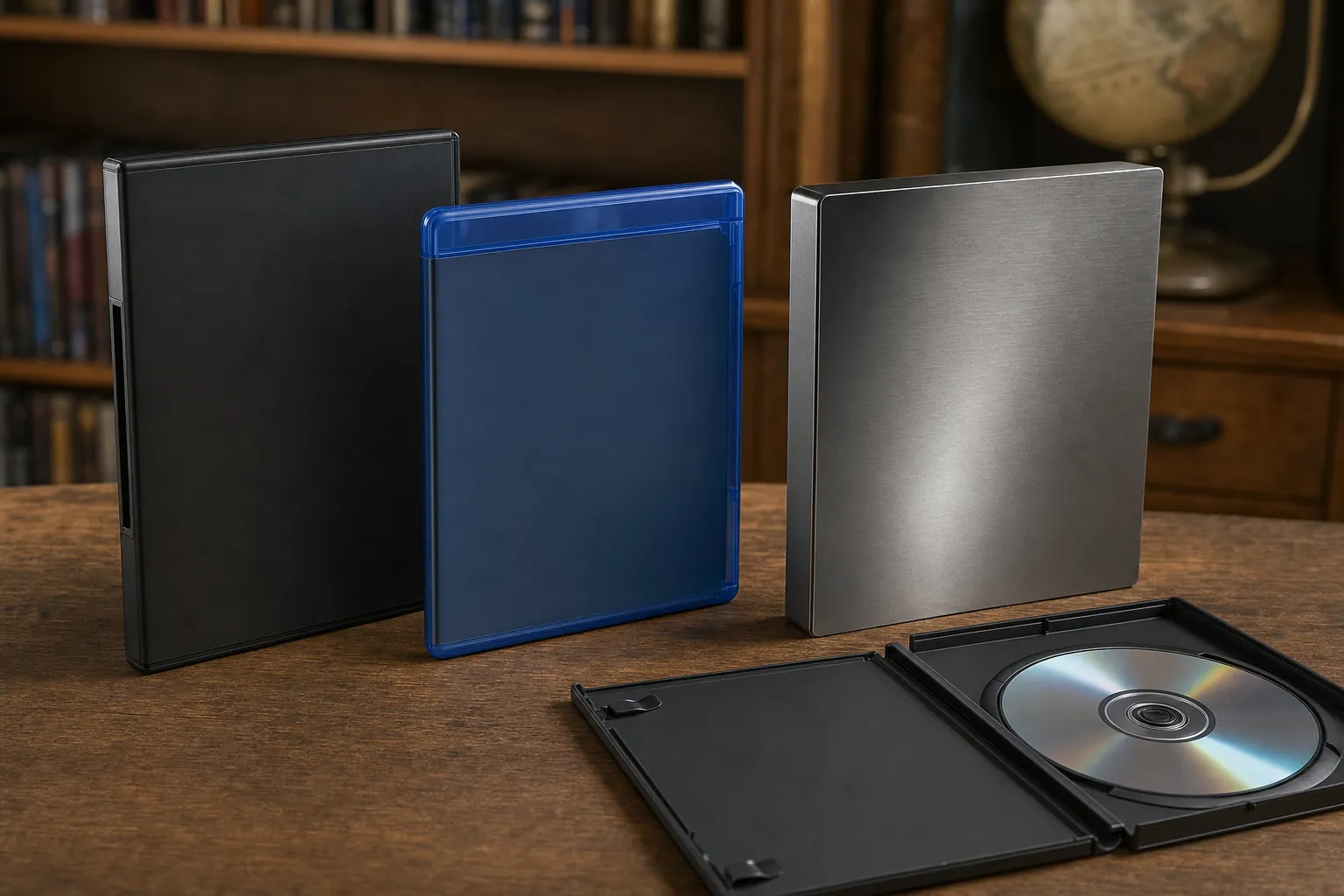
Most collectors will encounter three main disc formats. DVD remains important because many older films, television series, imports, concert releases, and hard-to-find titles were never widely upgraded. Blu-ray often offers a higher-capacity disc and can be a worthwhile step up when a release has a careful transfer, strong sound, or better supplemental material. 4K UHD is another option for viewers with compatible equipment who want the most from a newer restoration or a favorite film.
The format logo is only the start. A standard DVD may be the only complete version of a television miniseries. A Blu-ray can have a weak presentation while a different DVD has the preferred cut or subtitles. A 4K release can be wonderful, but it is not useful if it will not play on your equipment or if the movie itself is a one-time curiosity. Good collecting starts with the title and the edition, then works backward to the format.
Cases, booklets, commentaries, and bonus discs are part of the experience too. They are not required for every movie night, but they can turn a favorite into something you explore over time. That is especially true for classic cinema, cult films, television, and genre releases where different versions may tell very different stories about the same title.
What a disc gives you, and what it does not
The clearest benefit of physical media is control over your own library. You choose what belongs there, where it lives, and when you want to watch it. You do not need to search across services to see which one happens to carry a title this month. If the disc, player, and region all match, you can pull it from the shelf and press play.
That is different from saying every disc is better than every stream. Streaming can look excellent, and it remains the easiest way to sample a director, catch a recent release, or find something for a spontaneous evening. It also avoids the cost and space of buying a copy for every film that interests you. The strongest movie life for most people includes both: streaming for range, physical media for priorities.
Physical media also asks more of you. You need storage, a player, and a little patience when comparing releases. A disc can be scratched, an older player can fail, and a region-coded release may not work in your setup. These are not reasons to avoid collecting. They are reasons to buy with intention. The physical media versus streaming guide is useful when you are deciding which role each option should play in your movie life.
For collectors, the tradeoff is often worth it because access is personal. You are not building a library to beat an algorithm. You are keeping a small group of films and shows within reach because they have earned that place.
Why the edition matters more than the label
A movie is not always one fixed thing. One title may exist as a theatrical cut, an extended version, a television edit, a restoration, a dubbed release, a subtitled release, or a box set with documentaries and commentary tracks. The cover can look nearly identical while the contents differ in ways that matter a great deal to the person watching it.
Before buying, check the basics: format, playback region, runtime, aspect ratio, audio options, subtitles, and whether the listing is for a single film, a compilation, or a complete season. Then look at the details that make an edition worthwhile to you. Maybe it is the original cut. Maybe it is a commentary from the director, a restored transfer, or the full episodes rather than a highlights disc. The right choice is not always the newest or most expensive copy.
Collectors of older or unusual titles benefit most from this habit. A familiar film can be easy to find in a bare-bones version yet difficult to locate in the format, language, or complete edition you want. That is why the site’s out-of-print DVD guide focuses on availability as well as format. A listing is only useful when it helps you understand what you are actually bringing home.
When you are comparing two versions, make a short note of what would change your experience. If the answer is nothing, buy the simpler option or wait. If the answer is a preferred cut, the right subtitles, better sound, or a complete season, then you have a real reason to choose one edition over another.
Who benefits most from physical media?
Physical media suits people who know what they want to keep close. That might be someone rebuilding a childhood favorite shelf, a fan following a director, a viewer who wants an entire television series without guessing where it will appear next, or a movie lover who prefers a familiar disc night to endless browsing.
It is especially useful for titles outside the usual new-release cycle. Older television, cult horror, martial arts films, noir, regional releases, documentaries, concert videos, and family favorites can have uneven availability. A title may be common for years, then suddenly be harder to find. The store’s rare DVD guide explains why those changes can turn an ordinary-looking release into the copy collectors are trying to track down.
Collectors also get more from physical media because the shelf helps them see their own taste. A group of westerns, a run of crime thrillers, a growing stack of old-school kung fu, or a short row of favorite miniseries says something useful about what to look for next. The site’s genre guide can help turn that instinct into a more focused hunt.
None of this requires a huge room or a huge budget. A dozen films you love can be a real collection. The useful threshold is not size. It is whether you can find, play, and enjoy what you have.
How to start without turning it into clutter
Start with a list, not a sale. Write down five films you would happily rewatch, a show you wish you could keep in one place, and a few titles you would be disappointed to lose. That list gives you a reason to browse without making every inexpensive disc feel necessary.
Then check your equipment before you buy. Know whether you have a DVD, Blu-ray, or 4K UHD player, and pay attention to region details for imported releases. Decide where the cases will live. A small shelf, cabinet, or defined section is enough at first. When the space is full, let a new title earn its place rather than treating overflow as the default plan.
The guide to building a physical media collection goes deeper on choosing formats, setting a spending rule, and keeping a shelf organized. Its central idea is worth keeping: a personal library works best when it grows slowly enough for your taste to lead.
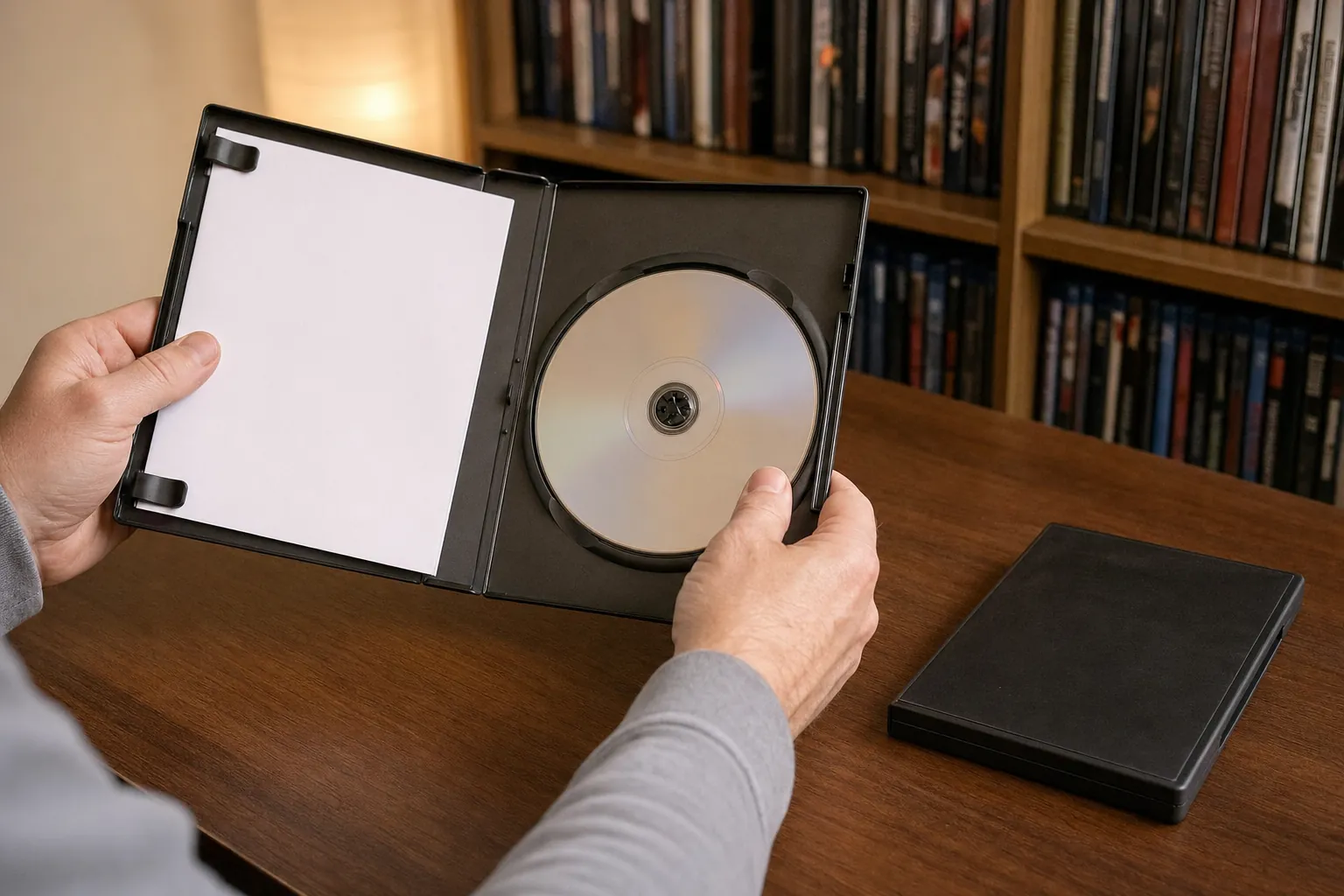
Care matters too, but it is not complicated. Keep discs in their cases, hold them by the edge and center hole, avoid direct sun and extreme heat, and store them where they will not be crushed or warped. The National Archives’ optical-media guidance recommends protective cases, vertical storage, and cleaning from the center outward with a soft lint-free cloth when needed.
Keeping a collection usable is part of the point. A short list or simple spreadsheet can help you avoid accidental duplicates, remember which version you own, and note the details you may care about later, such as region, subtitles, or an included commentary. This is not about turning movie night into paperwork. It is a small habit that makes a growing shelf easier to enjoy.
There is a useful preservation principle behind it too. The National Film Preservation Foundation explains that preservation supports both protecting films and making them available to be seen. A home collection is not an archive, but the lesson carries over: choose copies you can care for and find when you want to watch them.
Make the shelf work for your movie life
The goal is not to build a museum. It is to make movie night easier to enjoy. Keep a few reliable favorites where you can reach them. Use streaming to discover a filmmaker or genre, then add the films that stay with you. Compare editions when the details matter, and pass on them when they do not.
Retro and Classic Flixs is built for the next step after a title has earned that place: the rare release, the out-of-print favorite, the complete television run, and the genre discovery that regular retail browsing can miss. Browse the catalogue when you are ready to search with a title, genre, or shelf gap in mind, then explore the current movie catalogue for the films worth keeping.
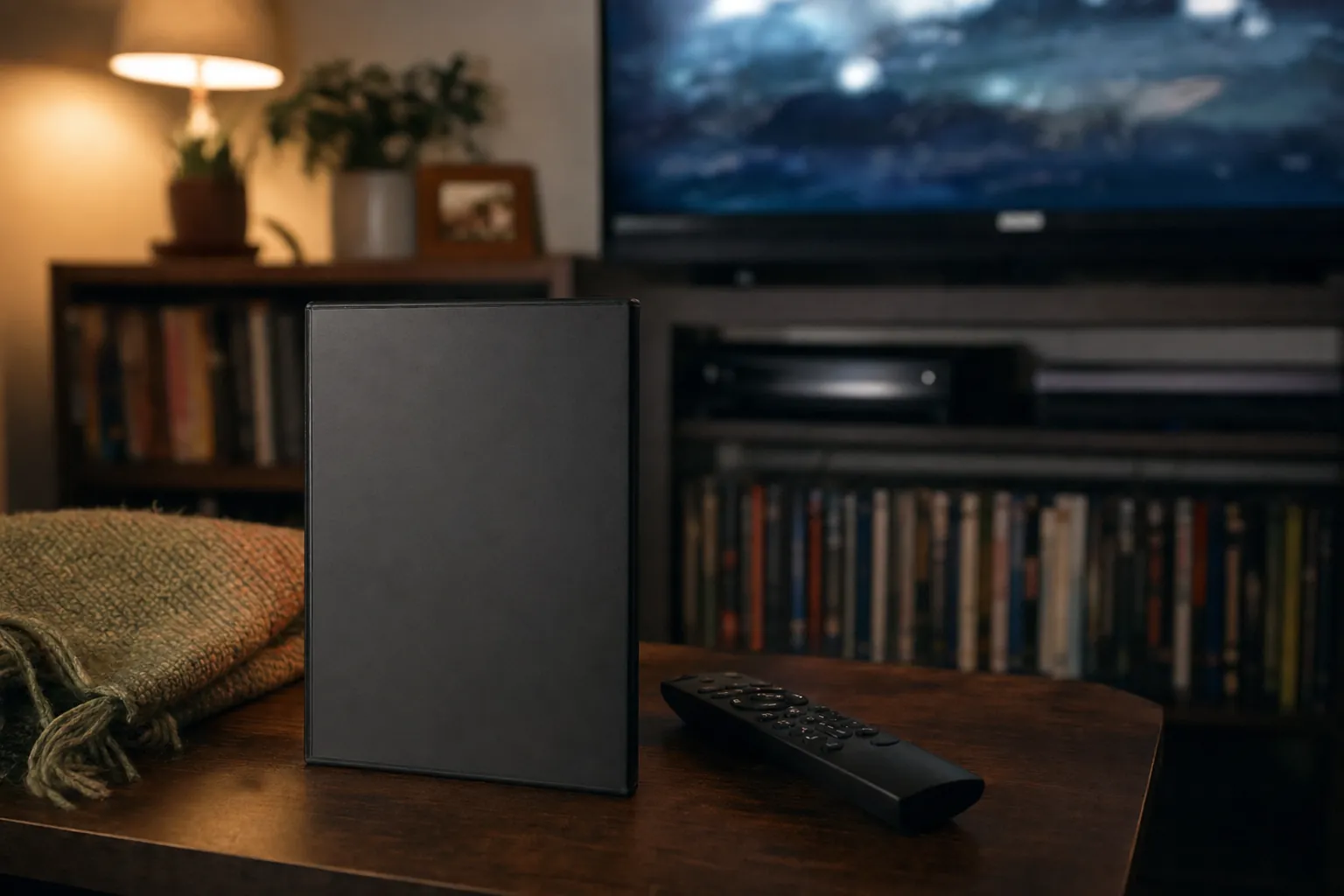
Physical media is simply a way to make your movie library more intentional. Keep what you care about, choose the edition that works for you, and let the shelf become a useful record of the films you want close at hand.
Frequently asked questions
Physical media, answered
What is physical media in movies?
Physical media is a movie or television release you can hold and play from your own copy, such as a DVD, Blu-ray, 4K UHD disc, VHS tape, or film reel. For most home collectors, the term usually means discs and their packaging.
Is buying a DVD the same as owning a movie?
Buying a disc gives you a physical copy of that particular release to keep, subject to the disc, player, and any region compatibility. It is different from relying on a title that appears in a streaming catalogue for a limited period.
Should I collect DVDs or Blu-rays?
Choose the format that works with your player and the edition you want. DVDs are often the practical choice for older, television, international, and obscure releases. Blu-ray and 4K can be worthwhile when a better transfer, sound mix, or set of extras matters to you.
Why do collectors care about different editions?
One film can have different cuts, aspect ratios, subtitles, audio tracks, restorations, and bonus features. Comparing editions helps you buy the version that fits how you want to watch and keep the film.
Keep exploring
More collector guides.
Collector guide
Physical Media Collection: How to Build One That Lasts
Build and catalog a physical media collection with a simple plan for choosing titles, recording editions, organizing a shelf, and keeping it useful.
Read guide →
Collector guide
Physical Media vs Streaming: A Collector’s Guide
A clear comparison of convenience, ownership, editions, cost, and care for viewers deciding what belongs on the shelf.
Read guide →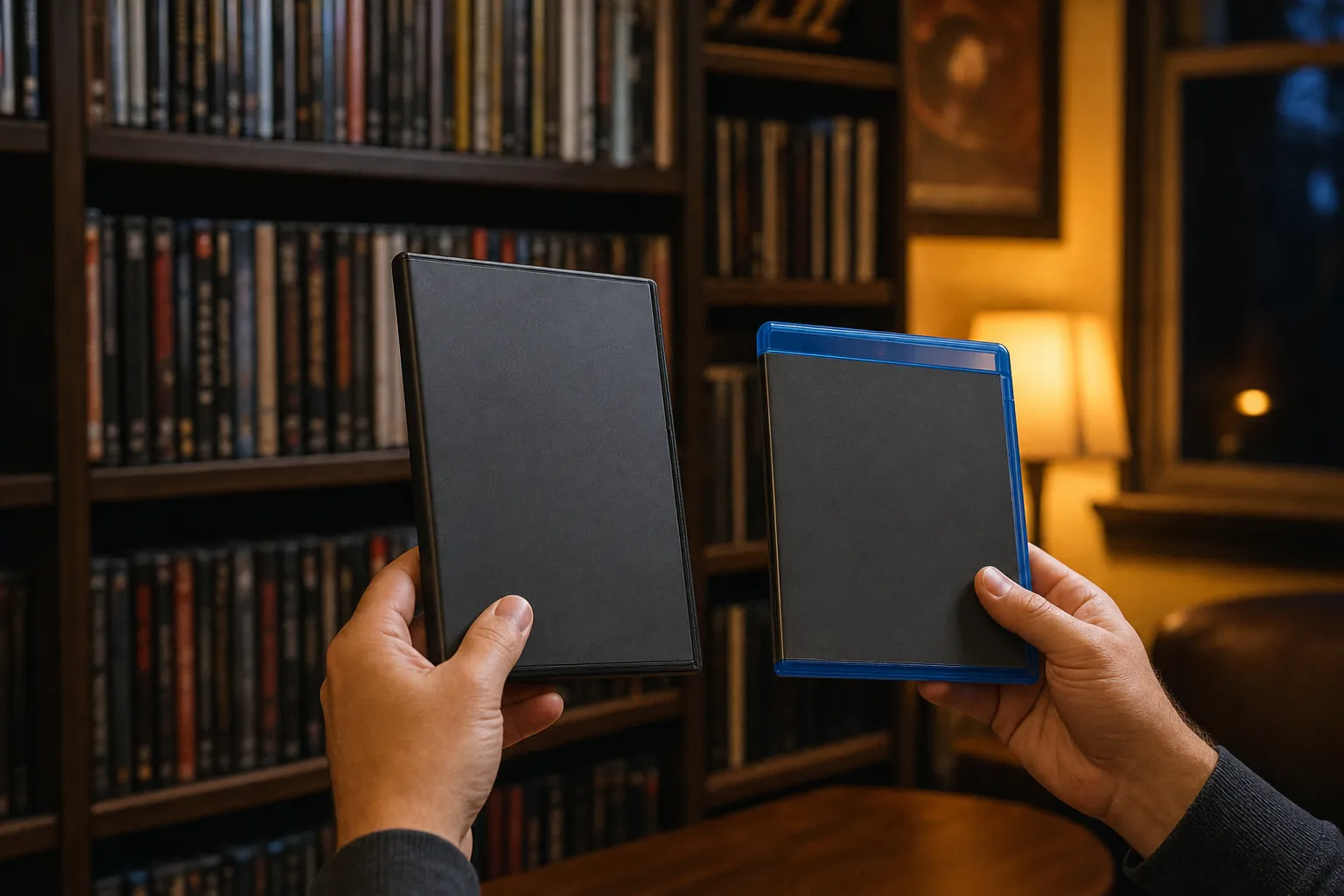
Collector guide
DVD vs. Blu-ray: Which Should You Buy?
Choose between DVD and Blu-ray with a clear look at picture quality, player compatibility, region codes, editions, and value.
Read guide →Ready for the hunt?