
Collector guide
DVD vs Blu-ray: Which Format Should You Buy?
A practical comparison of picture quality, compatibility, editions, and value for movie collectors choosing the right disc.
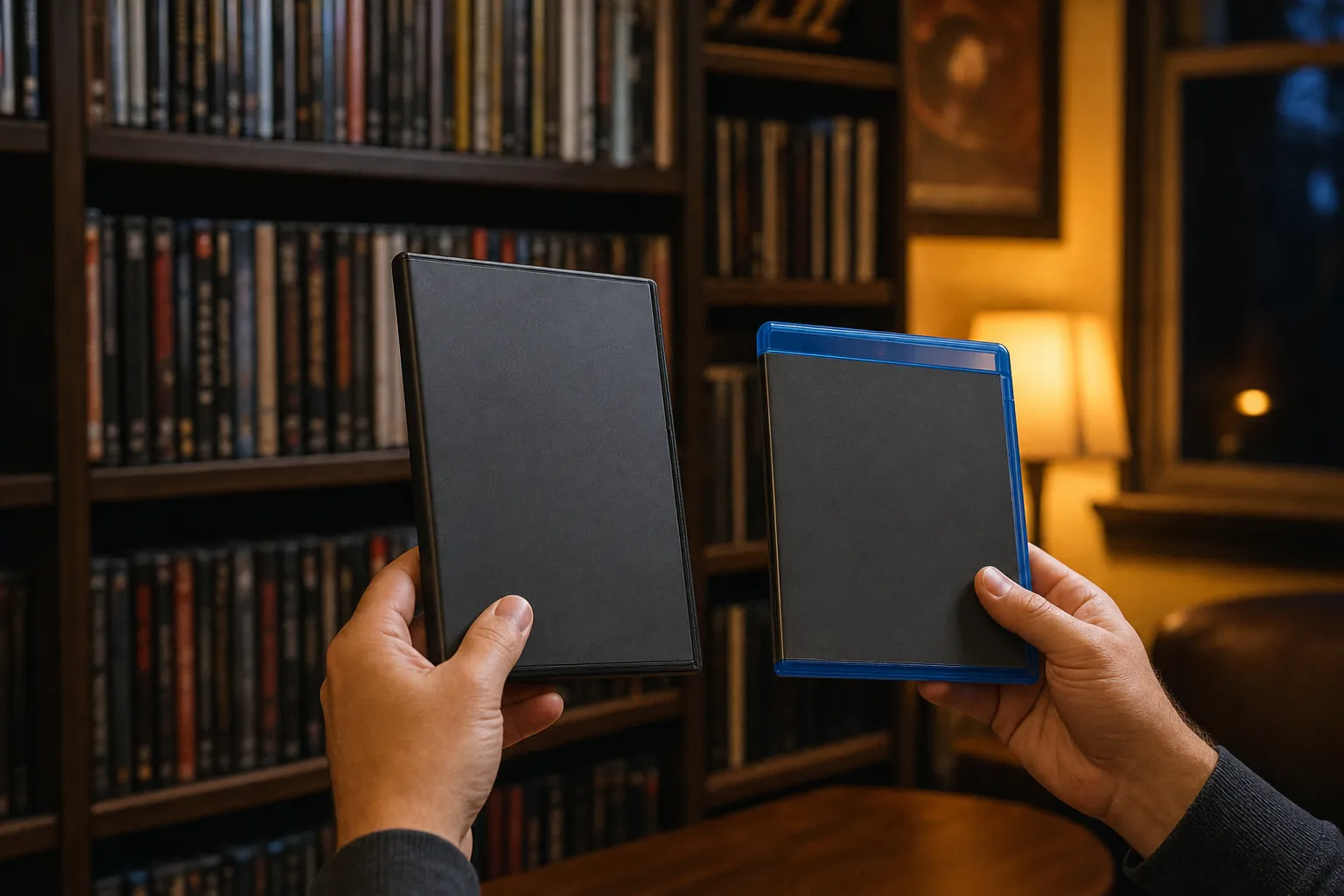
DVD versus Blu-ray is not really a contest between an old format and a newer one. It is a buying decision. You are choosing the version of a movie you can watch, enjoy, and keep. For some titles, Blu-ray is an obvious upgrade. For others, the DVD is still the complete edition, the affordable copy, or the only release that is easy to find.
The useful question is not, "Which logo wins?" It is, "What do I need from this particular movie?" Picture quality matters. So do your player, your television, the release's region, the cut of the film, bonus features, and whether the title is actually available. This guide breaks down those tradeoffs so you can buy with more confidence and avoid replacing discs just for the sake of replacing them. A good choice should make your next movie night better, not simply make the shelf look newer.
The short answer: buy the edition you will use
Blu-ray is usually the better technical format. It was designed to carry higher-definition video and more detailed audio than standard DVD, which is why a strong Blu-ray release can look more refined on a modern television. The Blu-ray Disc Association describes the format as a high-definition optical-disc system, but that does not make every Blu-ray release automatically essential.
DVD remains a practical collector format because it has a huge back catalog. Older movies, television runs, concert films, imports, niche documentaries, and discontinued releases often exist on DVD without a comparable Blu-ray. A well-authored DVD of the movie you want is more valuable than a beautiful Blu-ray of a different cut, a different region, or a title you do not care about.
A sensible default is simple. Choose Blu-ray when the title has a genuinely better transfer, you can play it, and the difference will matter to you. Choose DVD when it is the best available version, the right region, the complete release, or the version that fits your budget. If you are still deciding whether a disc belongs on your shelf at all, the physical media versus streaming guide can help you decide what should be a permanent part of your movie life.
Picture quality: where Blu-ray has the clearest advantage
On the right release and screen, Blu-ray generally gives a movie more room to breathe. Fine details can look cleaner, film grain can be more natural, and busy scenes can hold together better. Dark scenes often benefit too, especially when a careful transfer keeps shadow detail from becoming a gray or black blur. Those improvements are most noticeable on a larger television, from a reasonable viewing distance, with a Blu-ray player connected correctly.
That said, format is only one part of the picture. A Blu-ray cannot fix a poor restoration, a dated master, heavy digital processing, or a transfer made with little care. Some older Blu-rays look only modestly better than a good DVD, while others make a favorite film feel newly alive. The label tells you what the disc can deliver. The actual release tells you whether it delivers it well.
DVD is standard definition, so it shows its limits more readily on a large modern screen. You may notice softer edges, less fine detail, and more visible compression in scenes with smoke, rain, movement, or detailed backgrounds. A good player and television can make DVD look very watchable, especially for casual viewing or older material, but they cannot create information that is not on the disc.
The practical test is your own viewing. If you are buying a favorite film you watch closely, a music performance where detail matters, or a visually rich movie you want to revisit for years, Blu-ray is often worth the extra attention. If you are buying a hard-to-find television miniseries, a rare genre title, or an older release you mainly want access to, a clean DVD can be the smarter choice.
Sound and extras: do not assume the newer disc has everything
Blu-ray has the capacity for stronger audio options, which can make a difference with a good sound system, a carefully mixed film, or a concert release. Dialogue can feel clearer, quiet moments can have more space, and a score can have more presence. The gain may be subtle through basic television speakers, but it can be meaningful when sound is part of why you love the movie.
Extras are less predictable. A Blu-ray may include a restored picture, a new commentary, a documentary, deleted scenes, or a booklet. It may also be a bare-bones upgrade that drops supplements an older DVD included. The same film can have one release with a commentary track, another with the theatrical trailer, and a third with a different cut entirely. Never treat the blue case as a guarantee that you are getting the most complete edition.
Before you buy, check the listing for the details that change your experience: runtime, cut, aspect ratio, audio tracks, subtitles, bonus discs, and special features. If the film is important to you, compare those details rather than comparing cover art. The physical media collector guide explains why an edition can matter as much as the movie itself.
It is also worth keeping a DVD when it has something the Blu-ray lacks. You do not need to choose one format for your entire shelf. A mixed-format collection can be more useful than a format-pure one because it lets each title earn its place on its own merits.
Compatibility comes before quality
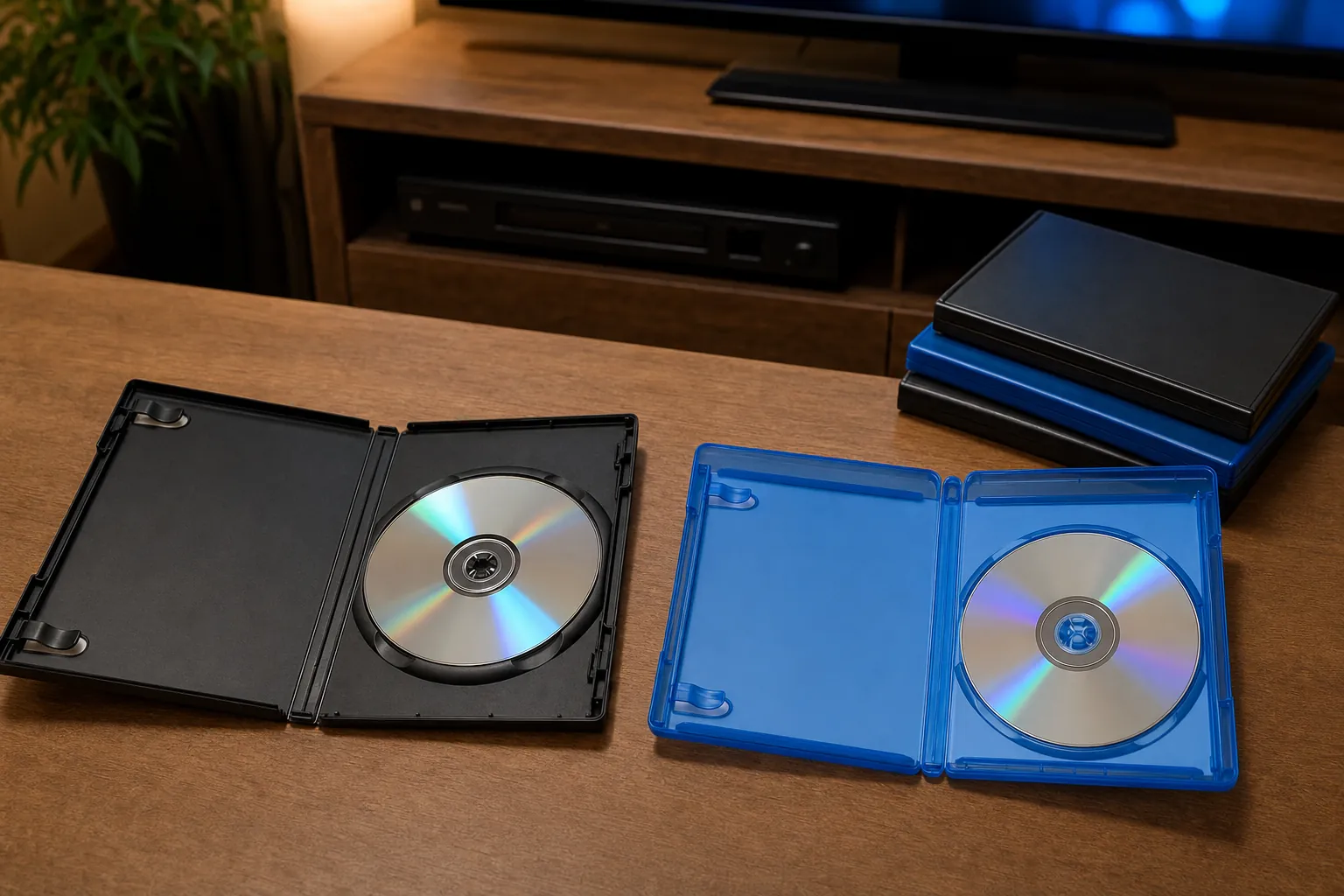
A Blu-ray player can usually play standard DVDs, which makes it a practical option for collectors who want to keep both formats in rotation. A standard DVD player cannot play Blu-ray discs. That is the first compatibility question, but it is not the last one.
Region codes matter whenever you are looking at imports or older releases. DVD regions and Blu-ray regions are separate systems. A player may handle a DVD from one region but reject a Blu-ray from another. A listing can be perfectly accurate and still be a frustrating purchase if the disc and player do not match.
Check the disc's format and region before you order, especially when a title is hard to replace. It takes a minute and can prevent a long wait for a disc you cannot watch. The site's region-free DVD guide gives a practical overview of what to look for when compatibility is part of the hunt.
Equipment is not an afterthought. If your main player is a dependable DVD player and the DVD edition is the release you want, there is no rule saying you need a different setup before enjoying the film. If you already own a Blu-ray player and have a modern television, it makes sense to take advantage of strong Blu-ray releases when they suit the title.
Availability: DVD can be the better collector buy
For current studio releases, Blu-ray may be the easy choice. For older cinema, television, cult movies, and releases from smaller labels, the answer is often less tidy. Many titles received a DVD years ago and never got a broad Blu-ray upgrade. Some did get one, but it went out of print quickly or only appeared in another region. Others exist on Blu-ray with a different edit, different subtitles, or fewer extras.
That is why collectors should separate "better format" from "better purchase." The best purchase is the one that gives you the film you want in a version you can play. A complete DVD set of a television series can be much more satisfying than waiting for a Blu-ray that may never arrive. The same is true for obscure movies that surface only in older disc editions.
If a title is becoming harder to find, availability can outweigh format. The site’s out-of-print DVD guide explains why an ordinary-looking disc can become difficult to replace once a release disappears from normal retail channels. The rare DVD guide is useful when you are deciding whether a hard-to-find copy is worth adding before the trail gets colder.
Do not buy a disc just because someone calls it rare. Buy it because it is a title you want, a version you understand, and a release that fits your equipment. Rarity without personal interest becomes shelf clutter. Availability plus a genuine reason to watch is what makes a collector purchase feel right.
Price, shelf space, and the cost of upgrading
DVD is often the easier format to collect on a budget. Used copies can be plentiful, and an older title may cost far less on DVD than on a newer high-definition release. That makes DVD a good way to explore a director, build a television library, or fill a genre gap without turning every purchase into a major decision.
Blu-ray can cost more because the release is newer, more limited, or packaged as a premium edition. Sometimes that extra cost buys you a visibly better presentation and extras you will use. Sometimes it buys a steelbook, a slipcover, or a small difference you will not notice after the first viewing. Decide what you are paying for before you decide whether it is worth it.
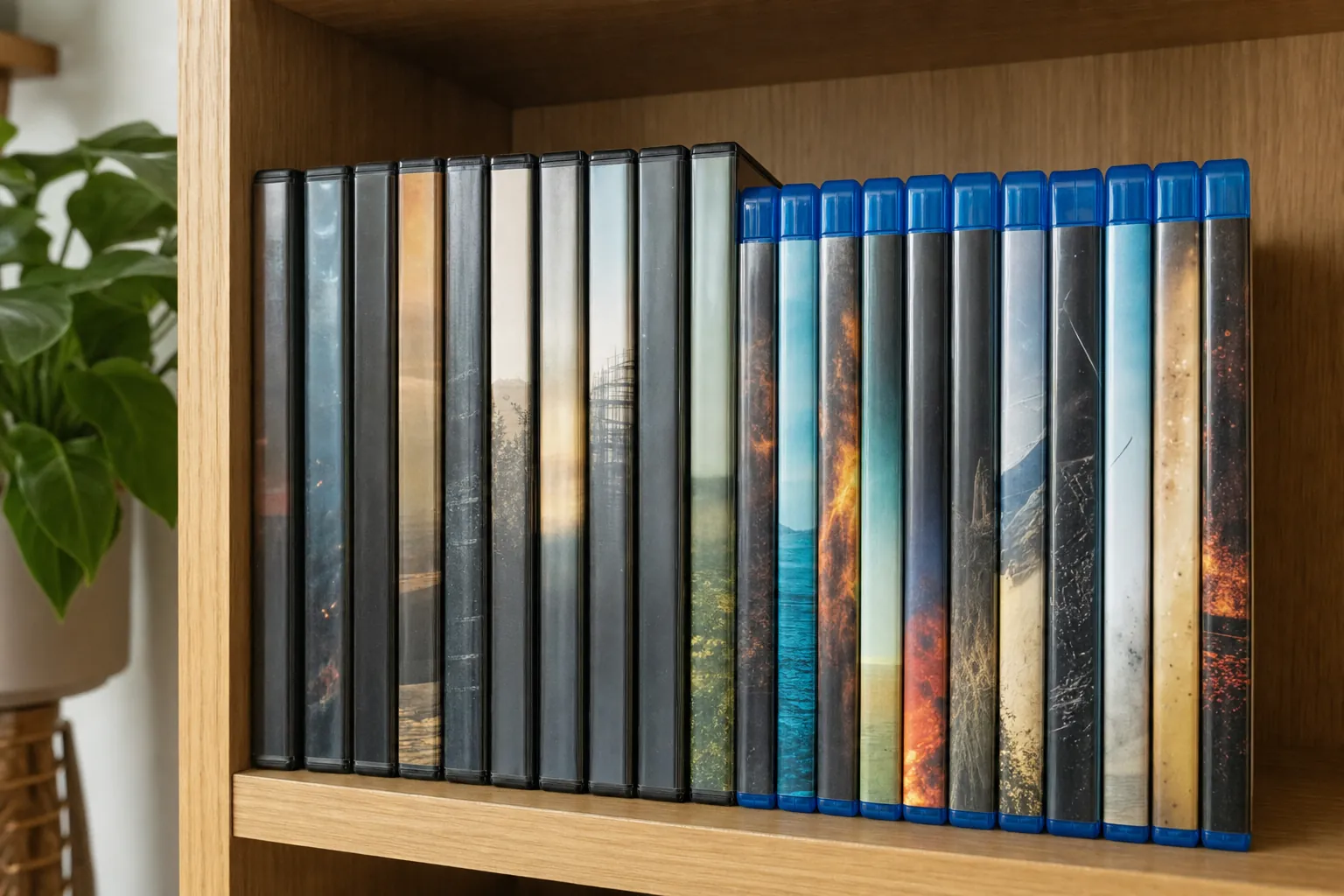
Shelf space is worth considering too. Standard DVD cases and Blu-ray cases take up a similar amount of room, so moving everything to Blu-ray will not magically solve a storage problem. A better strategy is to keep the editions you actually watch, avoid duplicate upgrades that add little, and give each purchase a purpose. The collection-building guide has a simple approach to keeping a movie shelf intentional instead of overwhelming.
There is no prize for replacing every DVD you own. Upgrade selectively. Keep a favorite DVD if it already works for you. Spend the difference on a title you do not own, a complete season, or a hard-to-find release you would regret missing.
Do not judge an older movie by its release date
It is easy to assume that an older film belongs on DVD and a newer film belongs on Blu-ray. Real releases are not that neat. A black-and-white classic can look extraordinary on Blu-ray when it has been scanned and restored with care. A more recent movie can have a disappointing disc if the transfer is weak, the picture is overly processed, or the release offers very little beyond the film itself.
The source material matters too. Some movies were photographed in ways that reward a high-definition transfer. Others have production limits that a sharper disc cannot erase. Blu-ray can reveal more texture, but it can also reveal soft focus, grain, makeup, or effects that were less obvious on DVD. That is not automatically a flaw. It can simply be a more honest look at how the movie was made.
For collectors, this is a reason to be curious rather than rigid. Read what the edition offers, look at whether it uses a new restoration or an older master, and think about how much you care about the title. You do not need to become a technical reviewer to make a good decision. You only need to know whether the release solves a problem you actually have.
That problem may be simple. Perhaps you want a clearer image for a favorite film. Perhaps you need the full version of a TV movie. Perhaps the DVD has been out of print for years and a clean copy has finally turned up. A good collection is built from those specific reasons, not from a rule that every title must move to the newest available format.
Watch for the edition traps that create regret
The most common collecting mistake is buying the format before checking the release. Covers can be confusingly similar. A new-looking Blu-ray may be a different region, a shortened cut, or a disc without the subtitles you need. An inexpensive DVD might be a compilation rather than the individual film. A box set can include a title you want but not the season, version, or extras you expected.
Build the habit of reading past the front cover. Verify the runtime. Look for the format and region. Confirm whether you are getting a feature, a complete series, a multi-film set, or a reissue with changed content. If a listing tells you very little, pause before buying, especially when the title is expensive or difficult to replace.
Be cautious with words such as "remastered," "collector's edition," and "special edition." They can point to a real improvement, but they do not explain what changed. A useful release tells you something concrete: a new restoration, a commentary, a documentary, a preferred cut, or expanded subtitle and audio options. If the label does not improve your actual experience, it is packaging, not a reason to upgrade.
Condition deserves the same attention. Scratches, missing discs, cracked hubs, and water-damaged artwork can turn a bargain into a disappointment. When buying used, a complete, clearly identified DVD can be a safer choice than a vague listing for a supposedly premium Blu-ray. The goal is not to own the most impressive-looking case. It is to bring home a disc you can watch and enjoy.
How to compare two editions before you buy
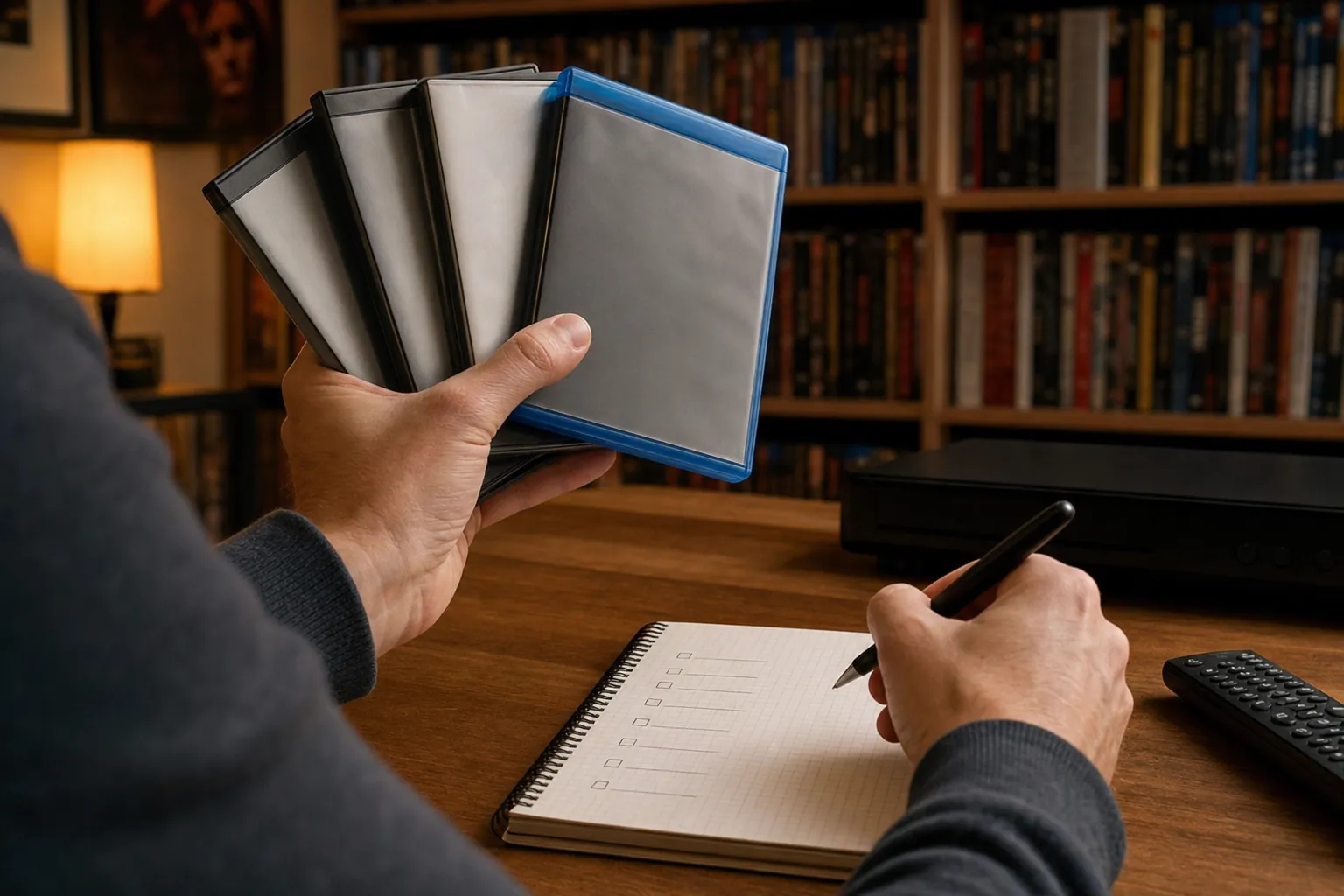
When a movie exists on both DVD and Blu-ray, work through a short checklist. Start with the version of the film. Is it the theatrical cut, an extended cut, a television edit, or a restored version? Then confirm that it will play on your equipment. After that, compare the details that will actually change your movie night.
Look at picture presentation, aspect ratio, audio, subtitles, runtime, and special features. A Blu-ray is compelling when it has a trusted transfer, the correct cut, and useful extras. A DVD is compelling when it is complete, available, reasonably priced, and compatible. If one listing leaves out key details, do not assume the missing information is in your favor.
Condition matters for used discs. Check that the listing identifies the edition, includes the disc, and gives you a clear sense of the case and packaging. Commercially pressed optical discs last best when they are handled carefully and stored in stable conditions. The National Archives' guidance on optical media recommends protective cases, vertical storage, and cleaning from the center outward with a soft lint-free cloth when needed.
For a specific title, use the site's title search before you settle on a format. You may find an edition you did not expect, or confirm that the version you want is currently available. If you are browsing more broadly, start with the catalogue or follow an interest into the genre collections.
When DVD is the right choice
Choose DVD when the release is the only version that gives you what you need. That may be a complete television season, a title that never made the jump to Blu-ray, a region-compatible import, a release with the preferred extras, or simply a movie you want to own without paying a premium.
DVD also makes sense for discovery. If you are curious about an older genre, a long television run, or a filmmaker with a deep catalog, affordable DVDs let you explore without turning every purchase into an upgrade project. The store’s TV miniseries collection is a good example of why availability and completeness can matter more than the newest format badge.
A DVD is not a compromise when it is the edition that lets you watch the right movie. It is a sensible collector choice.
When Blu-ray is worth paying for
Choose Blu-ray when picture and sound are central to why you love the film, and the edition delivers a real improvement. That is often true for visually rich movies, careful restorations, concerts, animation, or favorites you return to often. It can also be the better choice when a Blu-ray includes the cut, subtitles, or supplements you have been looking for.
Do not confuse a higher price with a better release. Read the details. If the Blu-ray offers the same cut, the same extras, and a modest improvement you will barely notice, the DVD may still be the better value. If the Blu-ray gives you a beautiful restoration and the complete edition of a favorite, it can be exactly the kind of upgrade that earns a place on the shelf.
Retro and Classic Flixs is built for that kind of title-by-title decision. The catalog is a place to look for the hard-to-find copy, the older release, the complete season, and the genre discovery that a regular browse can miss. Use the format as a guide, then let the edition and the movie make the final call.
Build a shelf that uses both formats well
The best collection is not all DVD or all Blu-ray. It is a useful library of films and shows you want close at hand. Keep the DVD that is complete, hard to replace, or simply good enough. Choose the Blu-ray that makes a favorite look and sound better. Let each disc earn its space through the movie and edition it gives you.
A mixed shelf also keeps the pressure off future purchases. You can pick up an older DVD because it fills a real gap, then wait for a Blu-ray upgrade only when it offers a meaningful reason to switch. You can keep a Blu-ray favorite beside a modest DVD run of television, foreign films, or cult releases without treating either group as second class. The point is access, not uniformity.
Make your next purchase easier by deciding what would make it worthwhile before you start browsing. A better transfer? The original cut? Region compatibility? A full season? A title you have searched for before? Once you can name the reason, the right format becomes much clearer. That small habit also protects your budget, because it turns a tempting case into a considered choice.
That approach leaves room for a collection with character: a row of older television, a few upgraded favorites, hard-to-find classics, and discoveries from genres you want to know better. Browse the current movie catalogue when you are ready to find a specific title or fill the next worthwhile space on your shelf.
Frequently asked questions
DVD and Blu-ray, answered
Is Blu-ray always better than DVD?
Blu-ray is usually the stronger choice when the release has a good high-definition transfer and you have a compatible player and television. DVD can still be the better buy when it is the only complete edition, the only affordable copy, or the version that works with your player and region.
Can a Blu-ray player play DVDs?
Most Blu-ray players can play standard DVDs, but a DVD player cannot play Blu-ray discs. Before buying an import, also check the player and disc regions because format compatibility and region compatibility are separate questions.
Are old DVDs worth buying?
Yes, when the DVD is the complete, available, or preferred release. Many older films, television series, and hard-to-find titles never received a broad Blu-ray upgrade, and a carefully chosen DVD can be much more useful than waiting for an edition that may never arrive.
Should I replace every DVD with Blu-ray?
No. Replace a DVD only when the newer release gives you something you will notice and value, such as a better presentation, a preferred cut, useful extras, or a more reliable disc. Keep the DVD when it is already the edition you enjoy or when it contains material the upgrade leaves out.
Keep exploring
More collector guides.
Collector guide
Physical Media Collection: How to Build One That Lasts
A practical starting point for choosing, cataloging, organizing, storing, and enjoying a movie collection you will actually use.
Read guide →
Collector guide
Physical Media vs Streaming: A Collector’s Guide
A clear comparison of convenience, ownership, editions, cost, and care for viewers deciding what belongs on the shelf.
Read guide →
Collector guide
What Is Physical Media? A Movie Collector’s Guide
A clear guide to DVDs, Blu-rays, editions, and the reasons some films deserve a place on your shelf.
Read guide →Ready for the hunt?