Film Articles
Classic Film Stars: Stewart, Brando and Hepburn
In this article
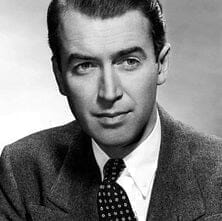
A familiar actor can make an unfamiliar film easier to choose. The more interesting discovery is what happens when the performance complicates your expectations. A reassuring face may become unsettling; apparent confidence may hide uncertainty; elegance may coexist with awkwardness.
James Stewart, Marlon Brando and Audrey Hepburn offer three very different starting points. Use these performances to look beyond the idea of a star as simply a personality appearing in a new costume.
James Stewart in Vertigo (1958)
Alfred Hitchcock’s thriller stars Stewart alongside Kim Novak and Barbara Bel Geddes. Stewart plays a detective drawn into a troubling mystery; Universal’s film record confirms the cast, director and year.
Watch how a recognizable voice affects your trust. Does familiarity make you accept the character’s point of view before you have examined it? Pay attention when concentration becomes fixation, and when an apparently ordinary conversation begins to feel controlling.
The useful comparison is between your first impression and your later response. A star’s established image can become material for the performance rather than a guarantee of the character’s reliability.
Marlon Brando in A Streetcar Named Desire (1951)
Elia Kazan’s adaptation of Tennessee Williams’s play stars Brando as Stanley Kowalski, with Vivien Leigh as Blanche DuBois. The BFI film entry places the production in context.
Start with physical behavior. How does Stanley occupy a doorway or respond when another person enters his space? A performance can establish pressure before a line is spoken. Then notice the rhythm of speech: an ordinary remark can become a challenge because of how it interrupts someone else.
Recognizing an actor’s force does not require admiring the character. This is a disturbing adult drama; the tension between attention and discomfort is part of what makes the performance worth discussing.
Audrey Hepburn in Roman Holiday (1953)
William Wyler directs Hepburn as a princess exploring Rome away from her official obligations, opposite Gregory Peck as a reporter. Hepburn won an Academy Award for the role. Paramount’s film page confirms the story and award.
Look for the shifts between formal composure and spontaneous pleasure. When does the character seem to remember how she is expected to behave? Small changes in posture and timing can make the distance between public duty and private desire feel immediate.
For a useful comparison with the other two films, watch how each actor responds while someone else is speaking. Listening often reveals more about the character than the most famous speech.
Follow a performance into your next DVD choice
Write down the quality that interested you: comic timing, restraint, unease or intensity. Then choose another film that might test that quality in a different setting. You do not need to collect a complete filmography to build a rewarding connection with an actor’s work.
Browse the current DVD catalog or explore suspense films, drama and romance. The performances above are viewing recommendations, not a promise that each title is currently stocked.